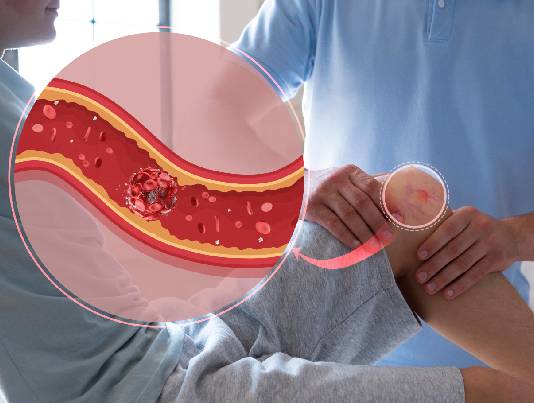
Peripheral Artery Disease

A circulatory condition in which narrowed blood vessels reduce blood flow to the limbs. Peripheral vascular disease is a sign of fatty deposits and calcium building up in the walls of the arteries (atherosclerosis). Risk factors include aging, diabetes and smoking. Symptoms may include leg pain, particularly when walking. Tobacco cessation, exercise and a healthy diet are often helpful. When these changes aren't enough, medication, stent or surgery can help.

Symptoms

While many people with peripheral artery disease have mild or no symptoms, some people have leg pain when walking (claudication). Claudication symptoms include muscle pain or cramping in your legs or arms that's triggered by activity, such as walking, but disappears after a few minutes of rest. The location of the pain depends on the location of the clogged or narrowed artery. Calf pain is the most common location

Painful cramping in one or both of your hips, thighs or calf muscles after certain activities, such as walking or climbing stairs (claudication)

Leg numbness or weakness

Hair loss or slower hair growth on your feet and legs

Slower growth of your toenails

Shiny skin on your legs

No pulse or a weak pulse in your legs or feet

Erectile dysfunction in men

Coldness in your lower leg or foot, especially when compared with the other sideSores on your toes, feet or legs that won't heal

A change in the color of your legs

Treatment

Cardiologist recommendation depends on the underlying cause of your disease, the severity of your condition, and your overall health. Your health care provider will recommend ways that you can reduce your risk factors for atherosclerosis and PED. Not all risk factors can be changed, but most can be reduced. Reducing these risk factors can not only prevent your disease from getting worse but also may actually reverse your symptoms.